
Office Moving in Toronto: How to Plan a Move Without Downtime
A home move is about boxes. An office move is about people getting back to work. Desks have to be rebuilt, monitors reconnected and every chair has to land at the right station, ideally over one weekend. Here is how to plan it.
Grey Peacock moves offices of every size across Toronto and the GTA: single suites, multi-floor headquarters, studios and showrooms, along with the desks, chairs, storage and phone booths inside them. The companies that move smoothly all do the same thing: they plan the move as a project, months before the truck arrives.
3–6 months before: set the plan
- Pick a move manager inside the company. One person who makes decisions and talks to the movers, IT, landlord and staff.
- Get the floor plan for the new office and decide where every team sits.
- Decide what moves and what doesn't. Old furniture may cost more to move than to replace. New furniture can be delivered straight to the new office and installed before the move.
- Get written quotes from movers. Ask about crew size, disassembly and reinstallation, protection, insurance and after-hours rates.
6–8 weeks before: building logistics
Both buildings will have rules. Ask property management at the old and new address for:
- loading dock and freight elevator bookings;
- allowed moving hours (many towers only allow moves in the evening or on weekends);
- the certificate of insurance requirements for the mover;
- floor and elevator protection rules.
Book the dock and elevators as soon as your date is set.
4 weeks before: labelling system
A labelling system is what makes Monday work:
- Give every workstation a number on the new floor plan.
- Label each desk, chair, pedestal, monitor and box with that number.
- Use colours for floors or departments.
- Post the floor plan at the new office entrance on moving day.
When every piece has a destination, the crew can place it without asking.
2 weeks before: IT and special items
- Plan IT disconnection and reconnection with your IT team or provider. Servers and network equipment often move separately.
- List special items: safes, large printers, artwork, phone booths, AV equipment, kitchen appliances.
- Decide what gets packed by staff (personal items, desk drawers) and what the movers pack.
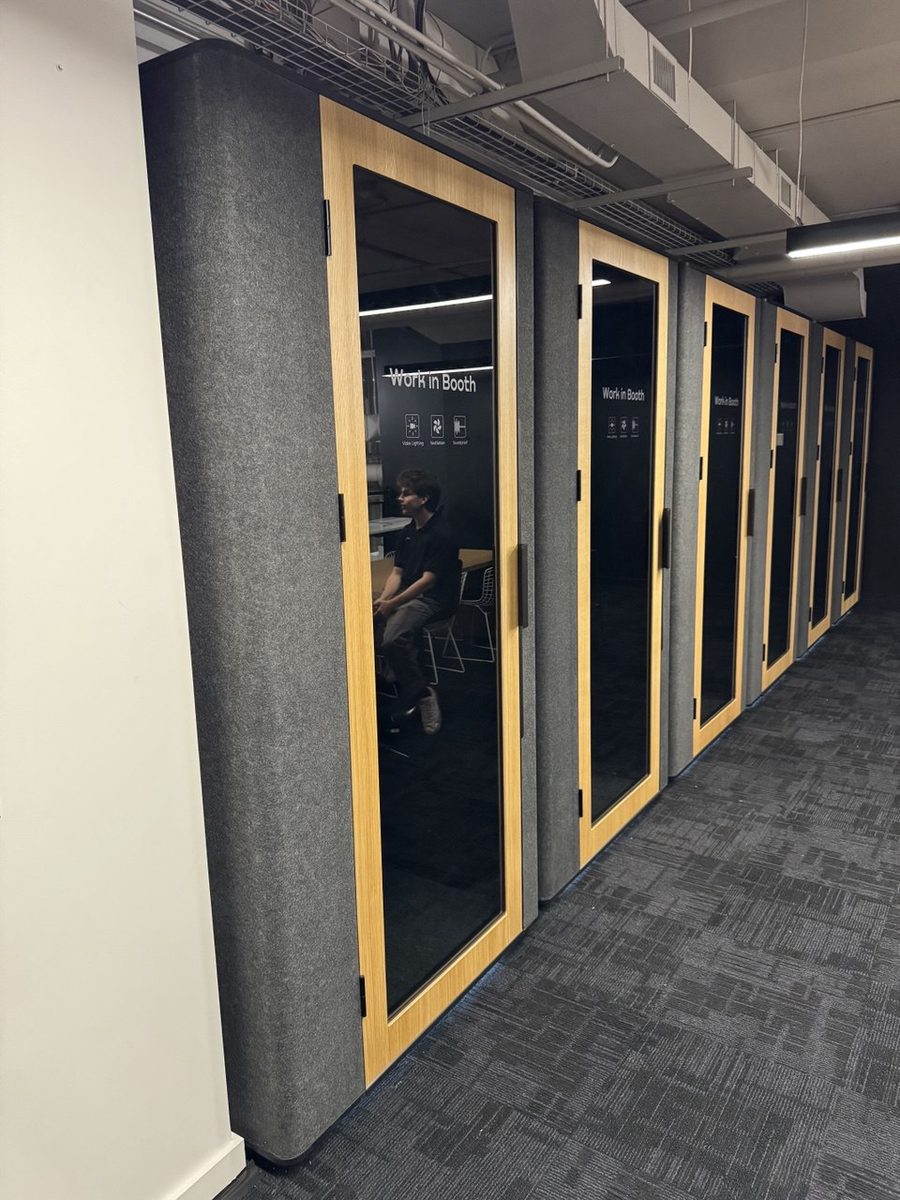
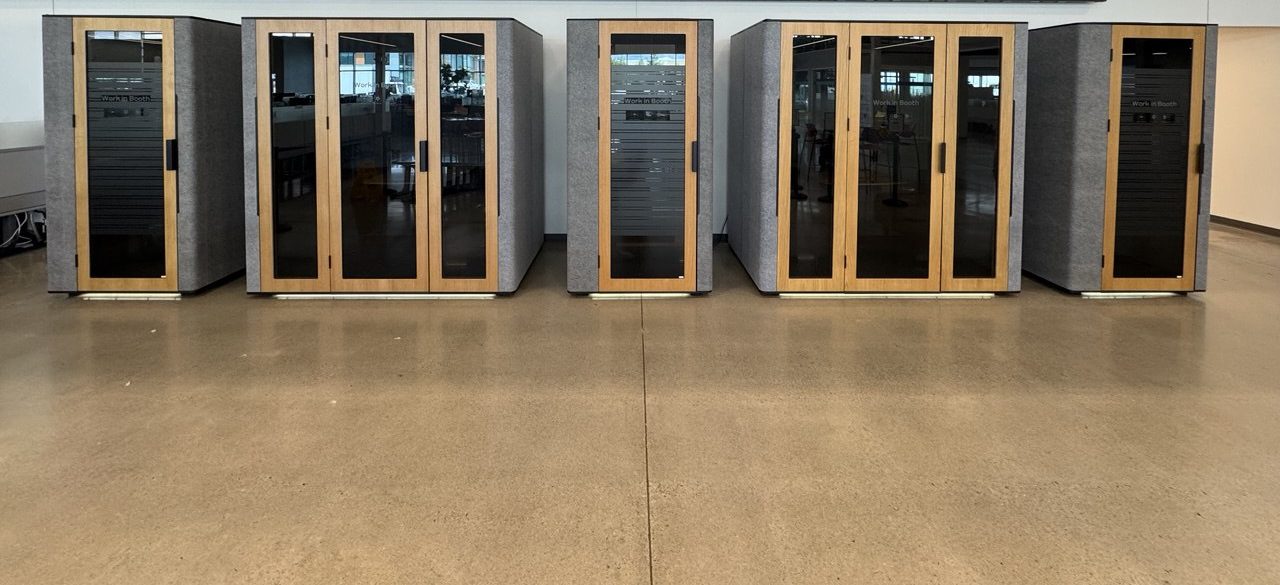
Phone booths and pods have to be taken apart and rebuilt. See how booth relocation works.
Moving week
- Staff pack personal items into labelled crates by Thursday.
- Friday evening: crews disassemble workstations, wrap furniture and load trucks.
- Saturday: unloading, reassembly and placement at the new office by station number.
- Sunday: IT reconnection, final adjustments and a walkthrough.
- Monday: the team arrives at a working office.
What to ask your mover
- Do you disassemble and reinstall workstations, or just transport them?
- Do you have experience with systems furniture, height-adjustable desks and phone booths?
- Can you work evenings and weekends?
- Will you send a certificate of insurance to both buildings?
- How do you protect floors, walls and elevators?
- Will you remove packaging and debris?
Moving in phases
For larger offices, moving everything at once isn't always possible. A phased move — one department or floor at a time — keeps part of the company working at all times. It takes more planning but reduces risk.
Get a quote
Send us both addresses, the number of workstations and any special items, and we'll prepare a written plan and quote. Learn more about our office and corporate moving services and office furniture installation.
Office moving checklist
3–6 months before
- Appoint an internal move manager
- Confirm the new lease, floor plan and move date
- Decide what furniture moves, what's sold and what's new
- Get written quotes from office movers
6–8 weeks before
- Book docks and freight elevators at both buildings
- Get COI requirements from both property managers
- Plan IT, phones and internet at the new office
- Tell clients, suppliers and couriers about the new address
4 weeks before
- Finalize the seating plan and workstation numbers
- Order labels and crates
- Plan new furniture deliveries to arrive before move day
2 weeks before
- Brief staff on packing and the move schedule
- Confirm special items with the movers
- Arrange cleaning at the old office
Moving week
- Staff pack personal items and clear desks
- Movers disassemble, wrap, load, deliver, reinstall
- IT reconnects; final walkthrough
After the move
- Collect feedback from staff and fix any issues
- Return keys and fobs at the old office
- Update your address everywhere: website, Google Business Profile, invoices and email signatures
How to tell your team about the move
A good office move is as much about communication as logistics:
- Share the date, the new address and the seating plan early.
- Explain what staff need to pack and by when.
- Give clear instructions for the first day: where to go, how to get access, where to park.
- Name one person staff can ask questions.
Moving office furniture: reuse, replace or recycle?
An office move is a good moment to look at your furniture:
- Reuse furniture that's in good condition and fits the new layout.
- Replace pieces that are worn or don't fit, and have the new furniture installed before move day.
- Recycle or donate what you don't need. Planning this early avoids paying to move furniture you'll throw away.
We can install new office furniture at the new location while moving the pieces you're keeping.
Office moving for different types of businesses
- Tech companies: many workstations, monitors and phone booths; speed and IT coordination are critical.
- Professional offices: files, confidential documents and client-facing reception areas.
- Studios and creative spaces: equipment, artwork and large tables.
- Showrooms: display furniture that has to look perfect at the new location.
- Institutions: larger, phased moves with strict scheduling. See our institutional and corporate relocation services.
How much does an office move cost?
Office moves are quoted per project. The main factors are:
- the number of workstations and amount of furniture;
- how much disassembly and reinstallation is needed;
- access at both buildings: docks, elevators, carrying distance;
- after-hours or weekend work;
- special items like phone booths, safes or servers.
A walkthrough or a detailed inventory with floor plans gives the most accurate quote.
Example office move plan
Here is what a typical plan can look like for a small-to-mid-size office moving across Toronto over one weekend. Every office is different; use it as a starting point.
Thursday
- Staff pack personal items into labelled crates.
- IT backs up systems and prepares equipment lists.
- Movers confirm dock and elevator times at both buildings.
Friday evening
- Crews protect floors, elevators and door frames at the old office.
- Workstations are disassembled; chairs and pedestals are labelled.
- Phone booths and pods are taken apart and wrapped.
- Trucks are loaded in the order they'll be unloaded.
Saturday
- Protection is laid at the new office.
- Furniture is unloaded and placed by workstation number.
- Desks and booths are reassembled and levelled.
Sunday
- IT reconnects computers, monitors and phones.
- Final adjustments, a walkthrough with the move manager and debris removal.
Monday
- Staff arrive at a ready office, with a floor plan at the entrance.
How to choose an office moving company in Toronto
Not every moving company is set up for offices. Look for:
- Experience with office furniture: systems furniture, benching, height-adjustable desks, phone booths.
- Installation skills, not just transport. Rebuilding workstations correctly is the hardest part.
- After-hours availability for evenings and weekends.
- Insurance and the ability to issue certificates of insurance to both buildings.
- A clear process: labelling, protection, scheduling and a single point of contact.
- References from companies of a similar size.
Office relocation within the same building
Moving to another floor or suite in the same building is simpler, but still needs planning: freight elevator bookings, protection, labelling and reinstallation. It's also a good moment to add new furniture or booths while the space is empty.
Reducing downtime during an office move
- Move non-essential items, like archives and storage, a week before.
- Have IT set up the network at the new office before the furniture arrives.
- Install new furniture before move day, so only existing items move on the weekend.
- Plan the first day back with a short check-in, so any issues are fixed quickly.
Frequently asked questions
How far in advance should we plan an office move?
For a small office, two to three months is usually enough. Larger offices often start planning six months ahead or more.
Can an office move be done over a weekend?
Yes. Many office moves are planned to start Friday evening and finish by Sunday, so the team works normally on Monday.
Do office movers disassemble and reinstall desks?
Professional office movers should. Ask specifically about systems furniture, height-adjustable desks and phone booths.
Who moves the IT equipment?
Usually your IT team or provider disconnects and reconnects computers, servers and networks. Movers transport the equipment safely. Plan this together.
Do we need a certificate of insurance for an office move?
Most Toronto office buildings require one from the mover. We send COIs to both buildings ahead of time.
Do you move offices outside Toronto?
Yes. We move offices across the GTA, including Mississauga, Vaughan, Markham and Richmond Hill, and across Ontario.
How do we keep track of furniture during the move?
With a labelling system: every workstation gets a number from the new floor plan, and every desk, chair and box is labelled with it. The crew places items by number at the new office.
Can you install new office furniture during the move?
Yes. New desks, chairs and booths can be delivered and installed before or during the move, so the new office is complete when the team arrives.
What happens to furniture we don't need?
Plan it early: some pieces can be sold, donated or recycled. Moving furniture you'll throw away costs time and money.
What should staff pack themselves?
Personal items, desk drawers, documents and anything on their desks. The movers handle furniture, monitors, booths and shared equipment.
Do we need to tell the building about our move?
Yes, both buildings. They will need dock and elevator bookings, a certificate of insurance from the mover and sometimes a list of the moving crew.
How do we update our business address?
Update your website, Google Business Profile, invoices, email signatures, banks, suppliers and government accounts. Start the list a few weeks before the move.
Office movers in Toronto and the GTA
We move offices in Downtown Toronto, North York, Midtown, Etobicoke and across the GTA, and handle office relocations across Ontario. From the first floor plan to the final walkthrough, our crew plans your office move so your team loses as little work time as possible.
Planning an office move? Send us both addresses and your floor plans for a written quote.
See Our Services Call Us: (647) 916-6381